ExhibitionsParadise Found
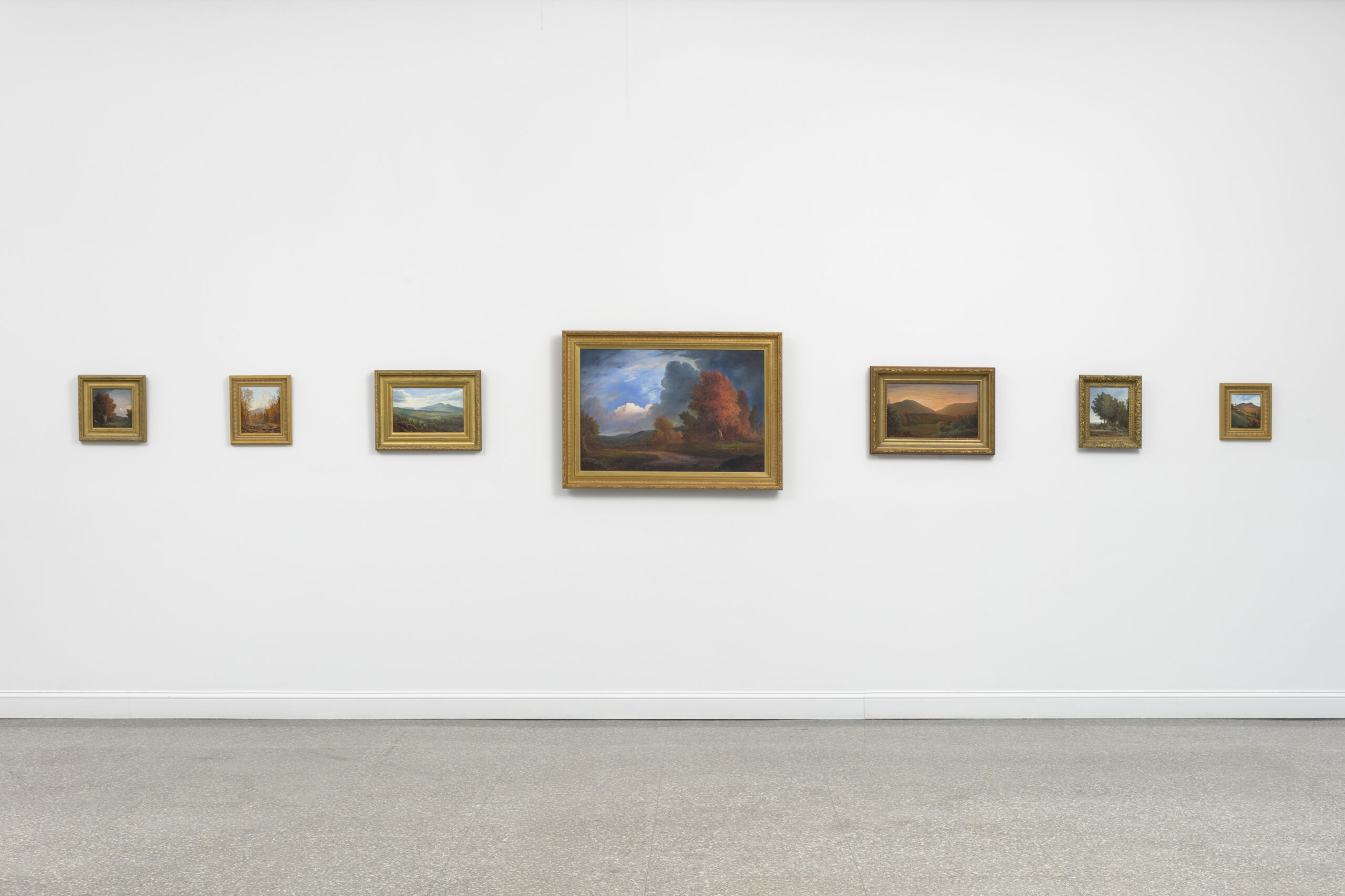
Installation view, Lauren Sansariqc, Paradise Found, 2026
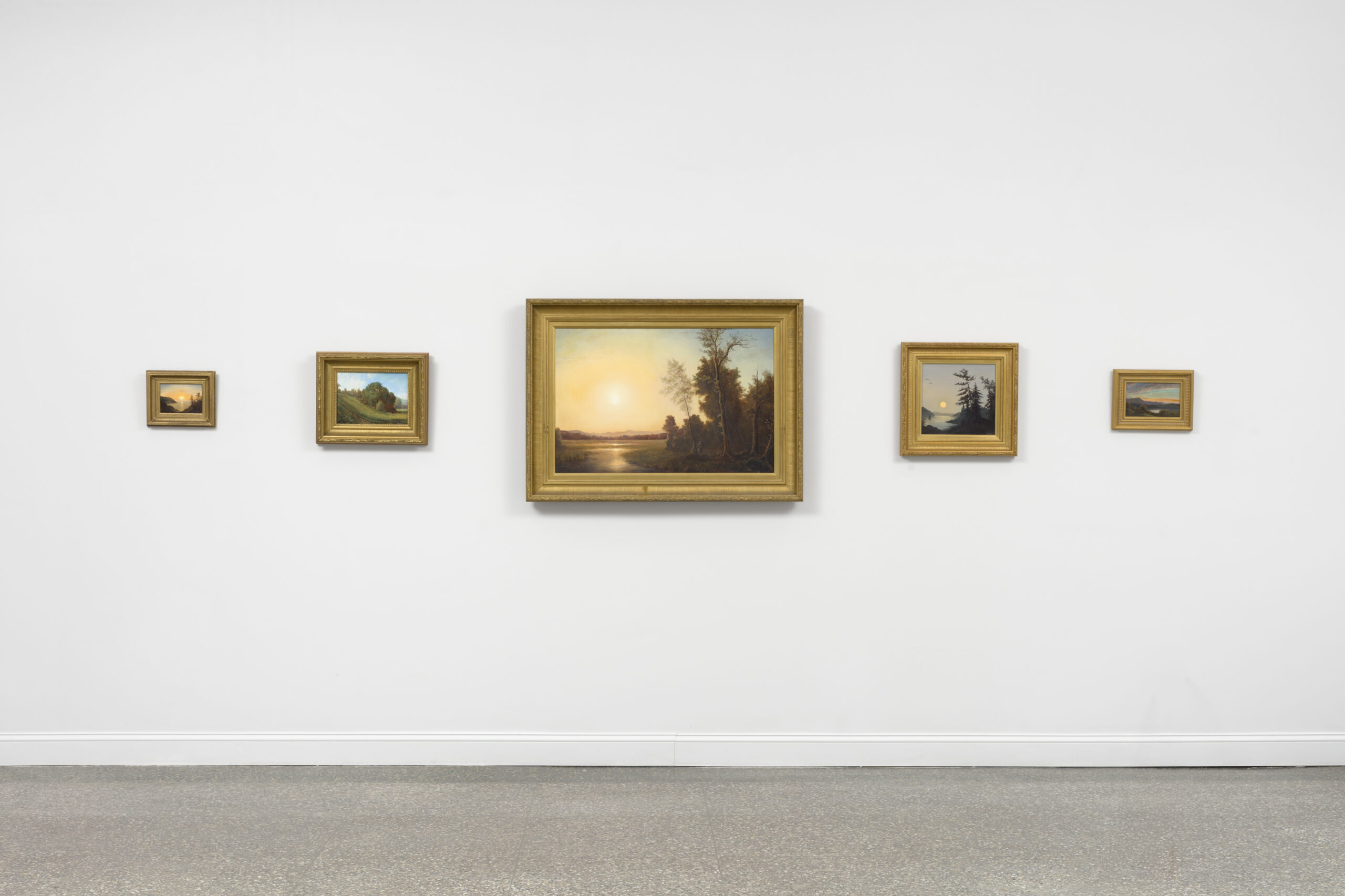
Installation view, Lauren Sansariqc, Paradise Found, 2026
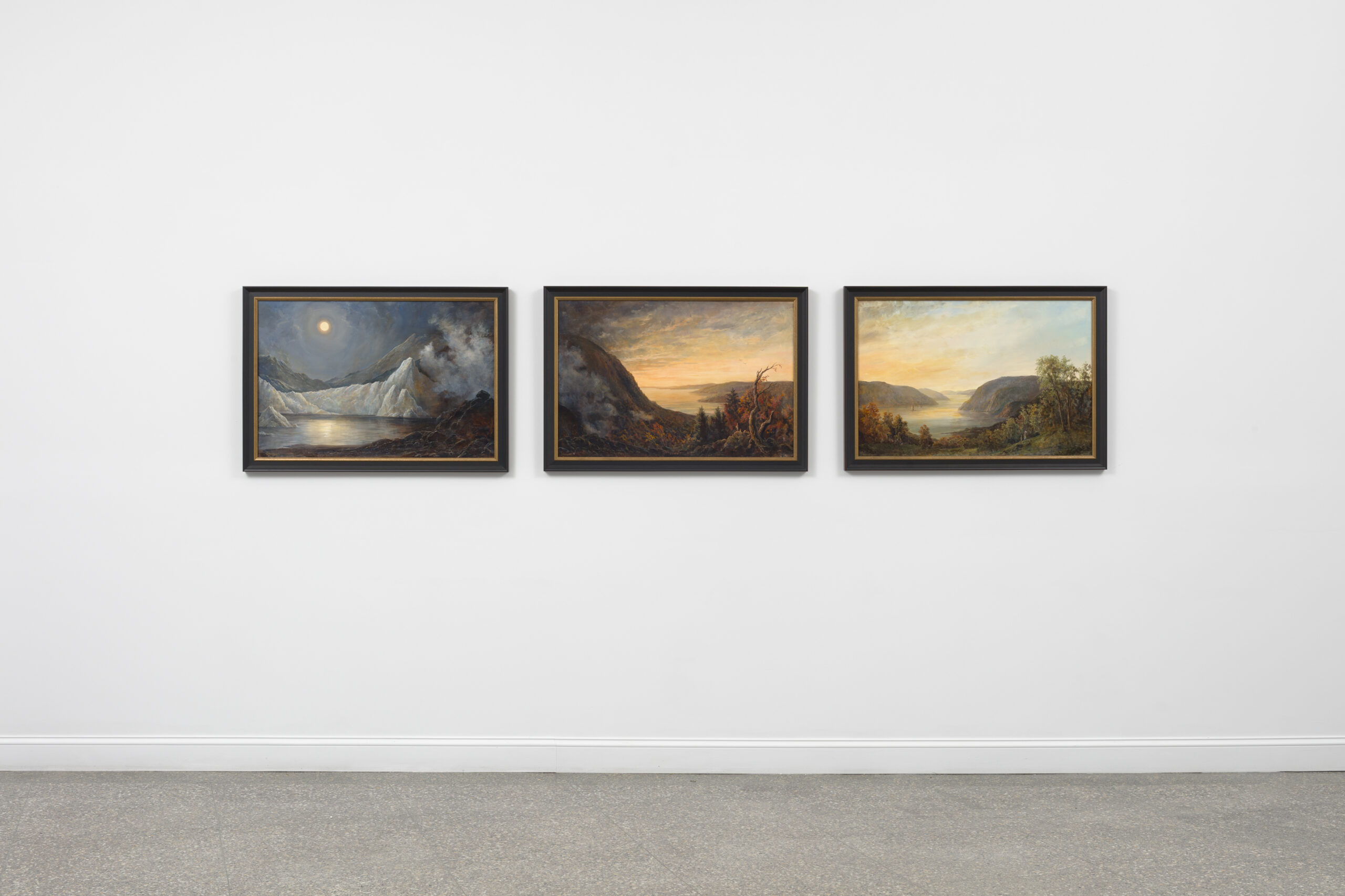
Installation view, Lauren Sansariqc, Paradise Found, 2026
Rooted in the same Hudson Valley soil that once shaped Thomas Cole, Lauren Sansaricq’s work carries forward a lineage of American landscape painting that understands nature not as backdrop, but as moral, spiritual, and existential ground.
Cole—the founder of the Hudson River School—believed the natural world to be a manifestation of the divine, a site of awe, warning, and reflection. His landscapes were never neutral; they were charged with meaning, shaped by anxiety over industrial expansion, faith in nature’s sanctity, and the belief that civilizations, like ecosystems, rise and fall in cycles of creation and decay. Sansaricq inherits this philosophical core, translating it into a contemporary practice that is both reverent and resolutely human.
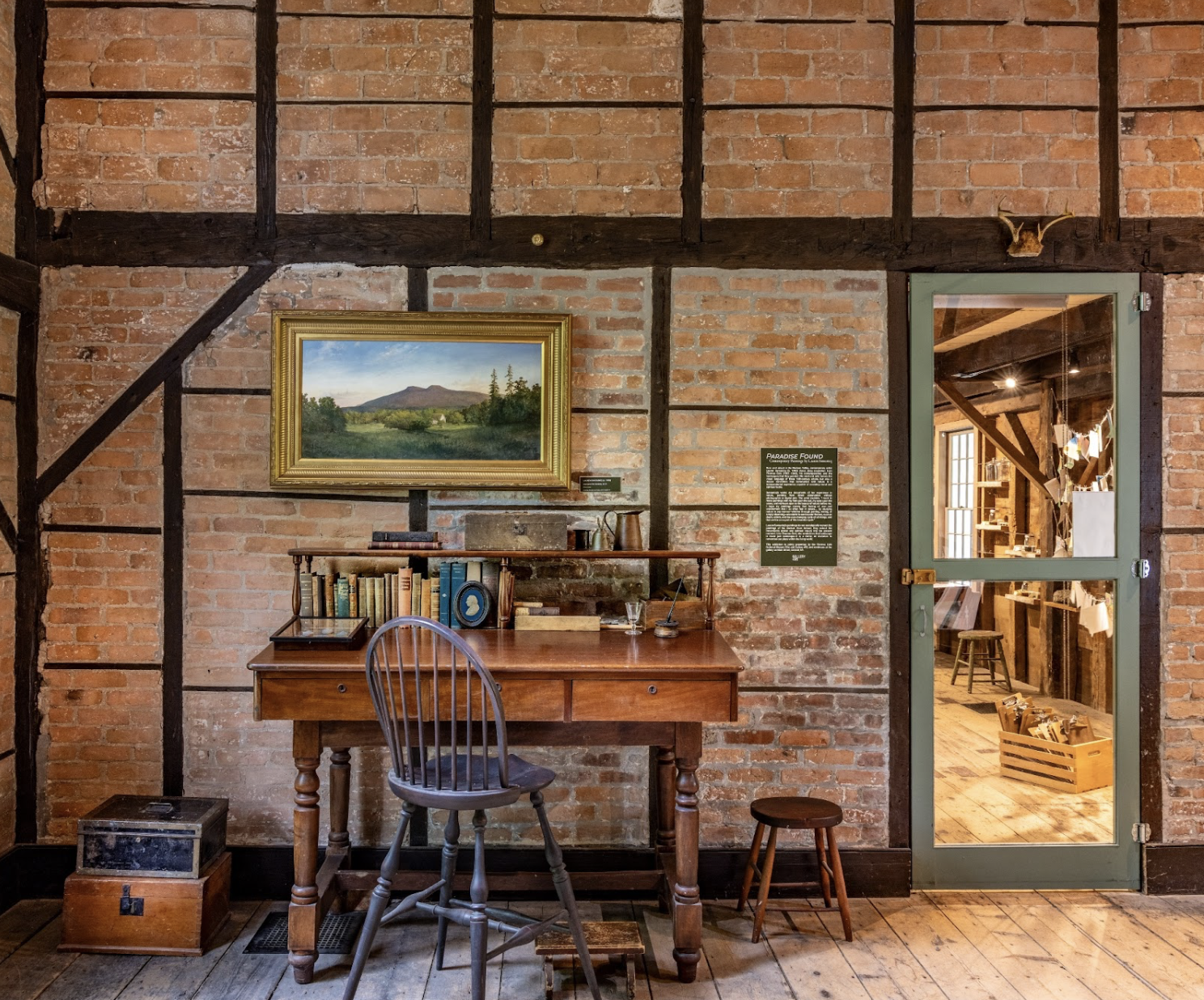
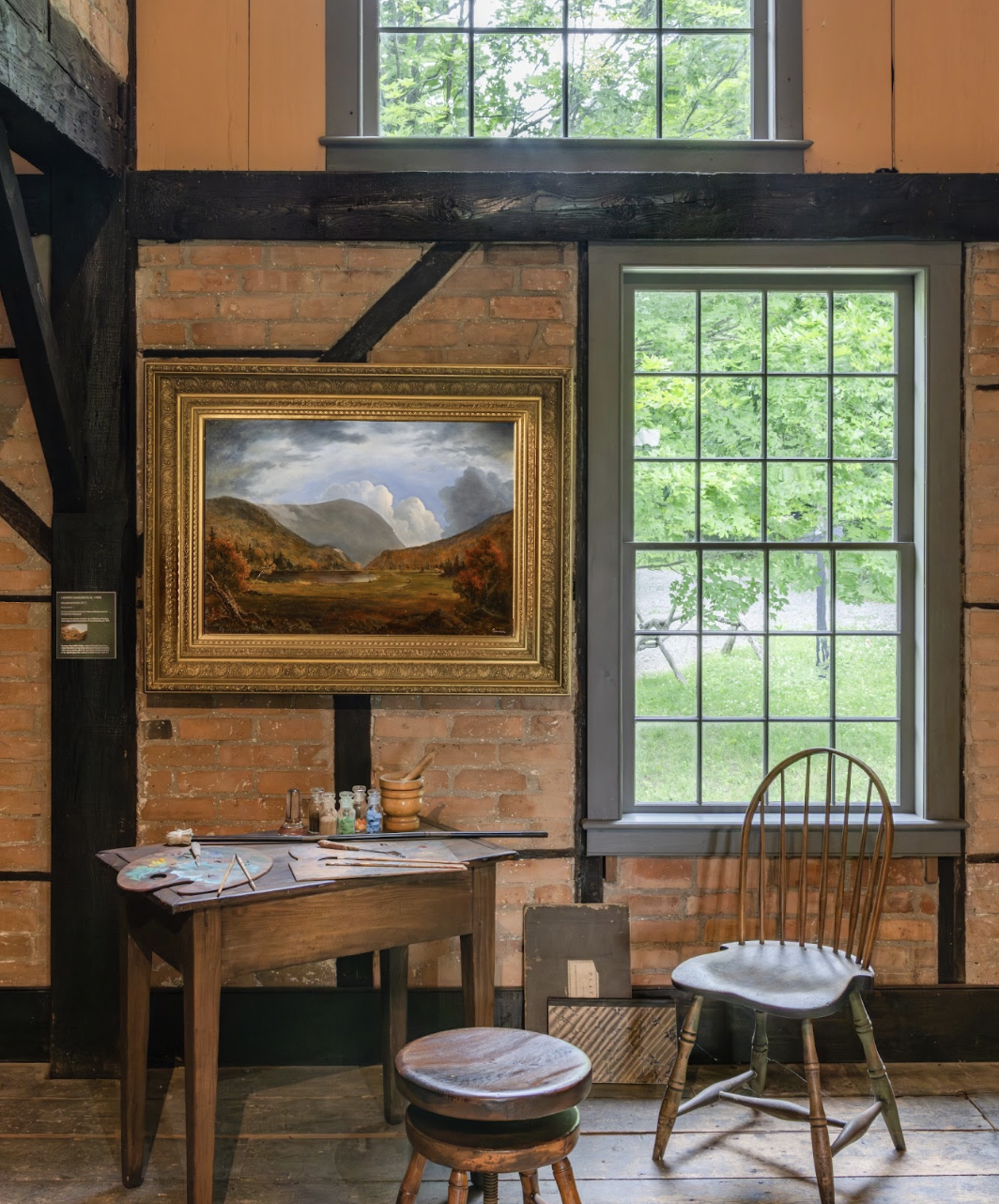
This continuity is made tangible through the concurrent exhibition at the Thomas Cole National Historic Site, where Sansaricq’s paintings are installed in the very studio where Cole created many of his landmark works, including The Voyage of Life series and The Oxbow. Presented within the spaces where the Hudson River School first took shape, her paintings enter into a direct dialogue with Cole’s enduring vision of the American landscape. Across nearly two centuries, both artists approach nature not simply as a subject to depict, but as a profound source of spiritual reflection, moral inquiry, and human understanding.
Raised in Columbia County, New York, Sansaricq grew up immersed in the pastoral beauty that first inspired Cole and his contemporaries. From an early age, she absorbed not only the visual language of the Hudson River School, but its deeper conviction: that communion with nature is a transcendental experience, capable of revealing moral and spiritual truths. This foundation was reinforced through years of mentorship under Thomas Locker at the Waldorf School, and later through formal training in drawing and painting at the Grand Central Academy of Art in New York City.
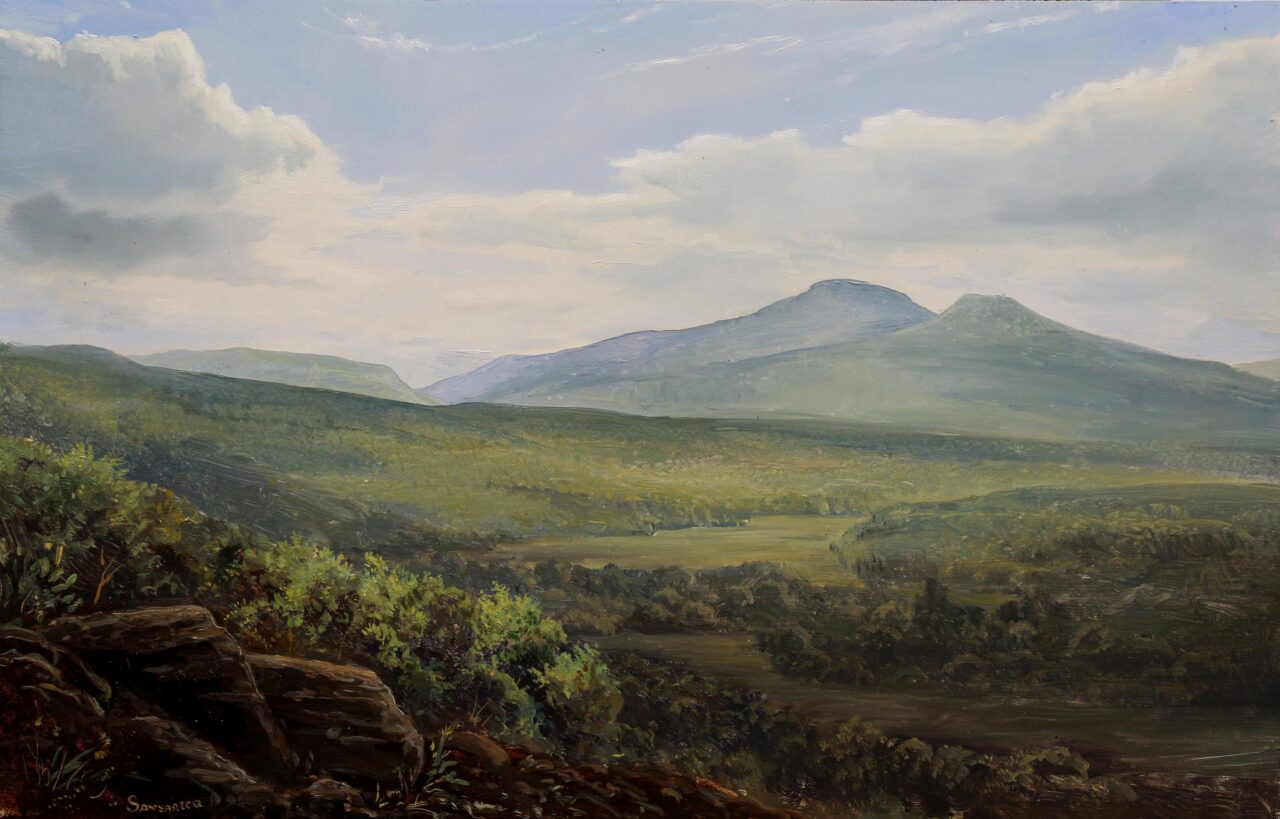
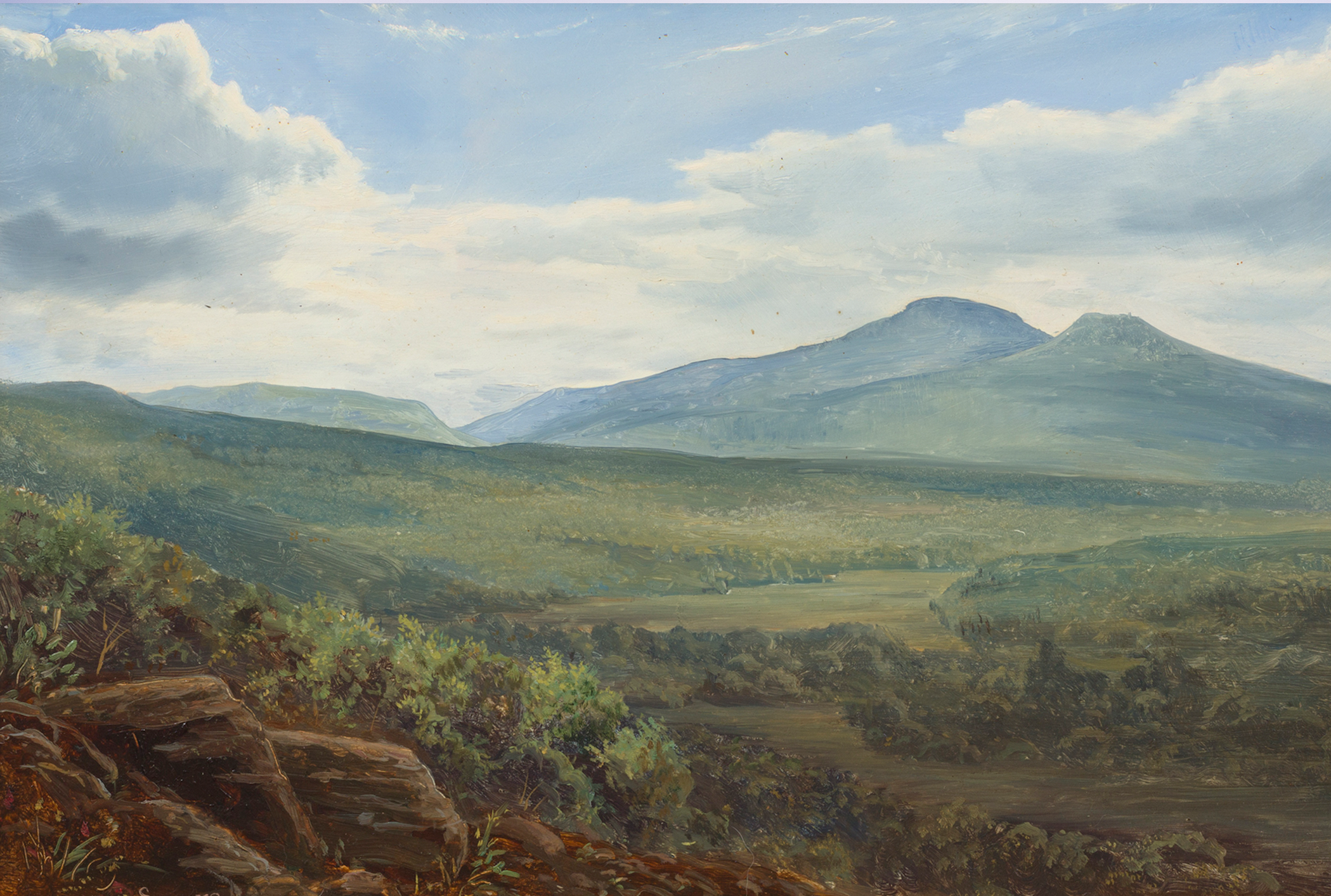
In an era increasingly mediated by AI, photography, and digital tools, Sansaricq’s practice stands as a quiet resistance. Like Cole, she insists on direct encounter, on presence. She works entirely from life, without photographic or digital aids, grounding her paintings in lived experience rather than technological mediation.
“I want to make paintings with my feet upon the soil, my eyes upon the scene, and my heart open to the beauty of nature before me,” Sansaricq says. “I hope my paintings convey that feeling of awe and wonderment that I so often feel in nature.”
Much as Cole viewed landscape painting as a moral and spiritual act, Sansaricq sees nature as a teacher—one that reveals interconnectedness, impermanence, and renewal. “By studying the simple beauty of nature, we can gain a true understanding of oneself, and moreover, the spiritual tissue that connects us all,” she reflects. “By studying nature in any manner—whether through painting, writing, or simply observing—one starts to see broader themes, such as death, rebirth, and the ever-changing cycle of all things, and that we too are a part of this beautiful cycle.”
Lauren Sansaricq’s paintings do not nostalgically reenact the Hudson River School; they extend its ethical and spiritual inquiry into the present moment. Like Thomas Cole, she reminds us that landscape is never just landscape—it is a mirror, an invitation to remember our place within the living world.
Paradise Found is on view concurrently at the Thomas Cole National Historic Site.