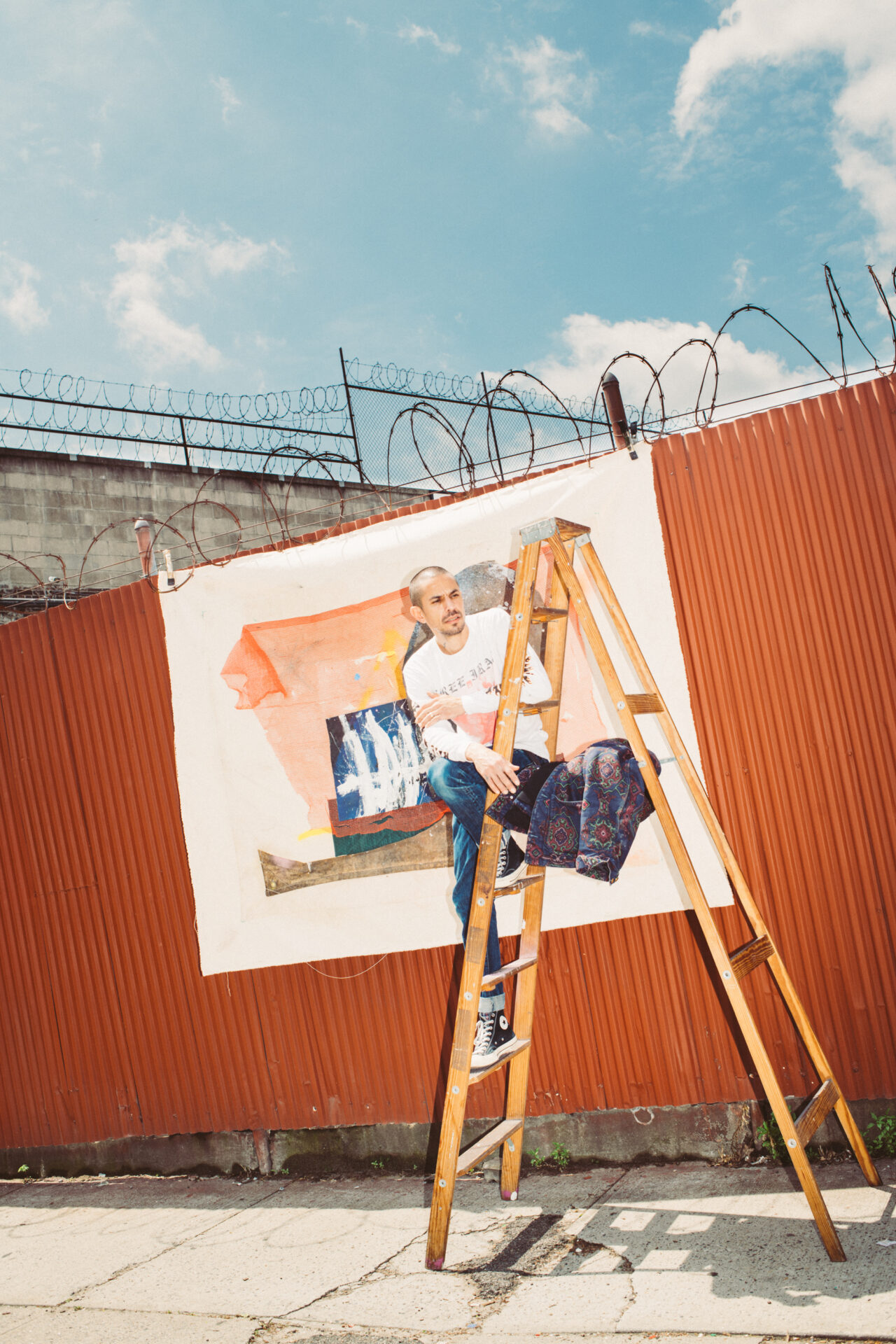
MosbyJoão Salomão: Painting the Rhythm
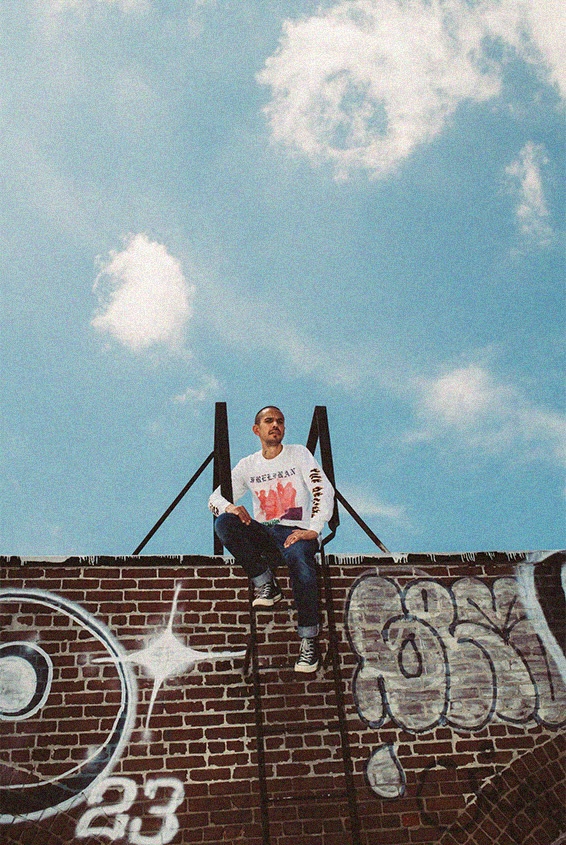
For more than three decades, João Salomão has cultivated a visual language that moves fluidly between the streets of Rio de Janeiro, the creative underground of New York City, and the expansive terrain of spiritual imagination. Working across painting, sculpture, drawing, and assemblage, Salomão transforms fragments of everyday life into vibrant compositions that pulse with energy, symbolism, and movement. His work resists fixed narratives, instead inviting viewers into a world where memory, observation, music, poetry, and intuition coexist in a continual state of transformation.
This expansive vision comes into focus in CIRCO DE VISÕES (Circus of Visions), a body of work that distills the artist’s lifelong exploration of abstraction into a series of immersive landscapes populated by symbols, gestures, and spiritual encounters. Through paintings, works on paper, and sculpture, Salomão constructs a visual theater in which the ordinary and the mystical merge. Figures, forms, and marks emerge and dissolve across the surface, performing within what the artist describes as a spiritual circus—a space where imagination becomes a tool for reinterpreting reality.
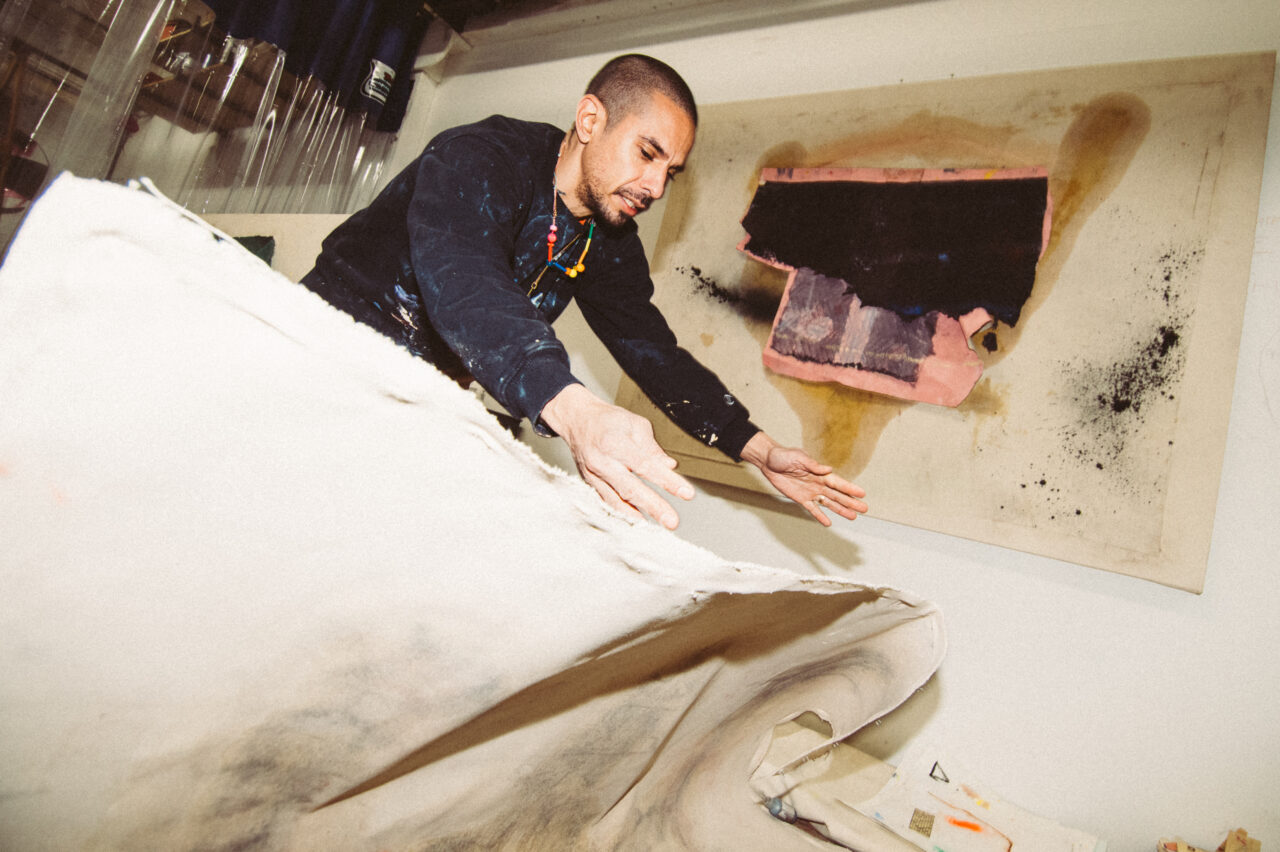
Salomão grew up surrounded by artists, musicians, poets, and cultural innovators associated with Brazil’s influential Tropicalia movement. This environment fostered an understanding of art as an open and experimental practice, one capable of absorbing diverse influences while challenging conventional boundaries between disciplines. The Tropicalists’ embrace of contradiction, hybridity, and creative freedom continues to resonate throughout Salomão’s work, informing his approach to both material and image.
After relocating to New York City in the early 1990s, Salomão became immersed in the vibrant cultural landscape of the Lower East Side. Skateboarding, graffiti, music, and street culture provided an endless source of inspiration. Rather than depicting these experiences directly, he developed a process of observation and translation. Daily encounters, fleeting conversations, urban textures, and spontaneous moments are recorded in journals and sketchbooks before being transformed into abstract compositions. Through gesture, rhythm, and color, Salomão reimagines the visual noise of the city as a dynamic field of possibility.
At the core of his practice is a belief that painting can function as a living record of experience. Layers of spray paint, charcoal, acrylic, fabric, and found materials accumulate across the surface like traces of memory. Marks appear and disappear, overlapping in a manner that echoes the density and unpredictability of urban life. Yet despite their apparent spontaneity, these compositions are guided by a deeply intuitive sense of balance. Salomão’s paintings continually negotiate the relationship between disorder and structure, improvisation and intention, chaos and harmony.
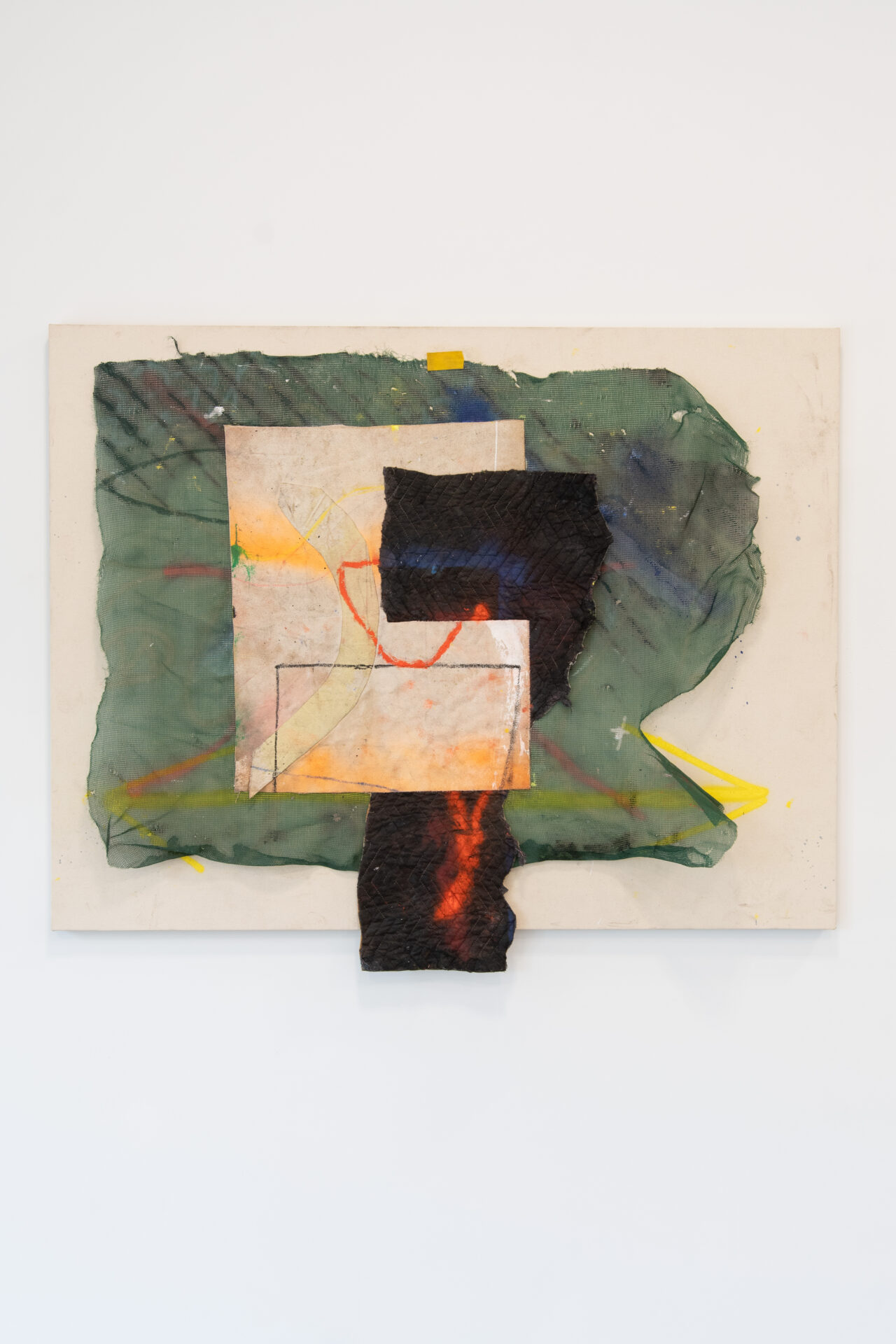
The incorporation of found materials has become increasingly central to the artist’s recent work. Construction-site remnants, discarded metal fragments, fabric, and ephemera collected from the streets enter into dialogue with painted gestures and drawn forms. These materials carry histories of labor, use, and transformation, extending the paintings beyond representation and into the realm of lived experience. Spray-painted lines evoke utility markings found on asphalt and sidewalks, while assemblages of texture and color create shifting spatial relationships that suggest movement, collision, and emergence.
Particularly significant within this body of work are journal entries and writings by Salomão’s father, the celebrated Brazilian artist and poet Jorge Salomão. Embedded within the compositions, these fragments introduce an intimate dimension to the work, linking personal memory with broader artistic lineage. Through their inclusion, painting becomes a site of intergenerational exchange—a space where inherited ideas and contemporary experiences converge.
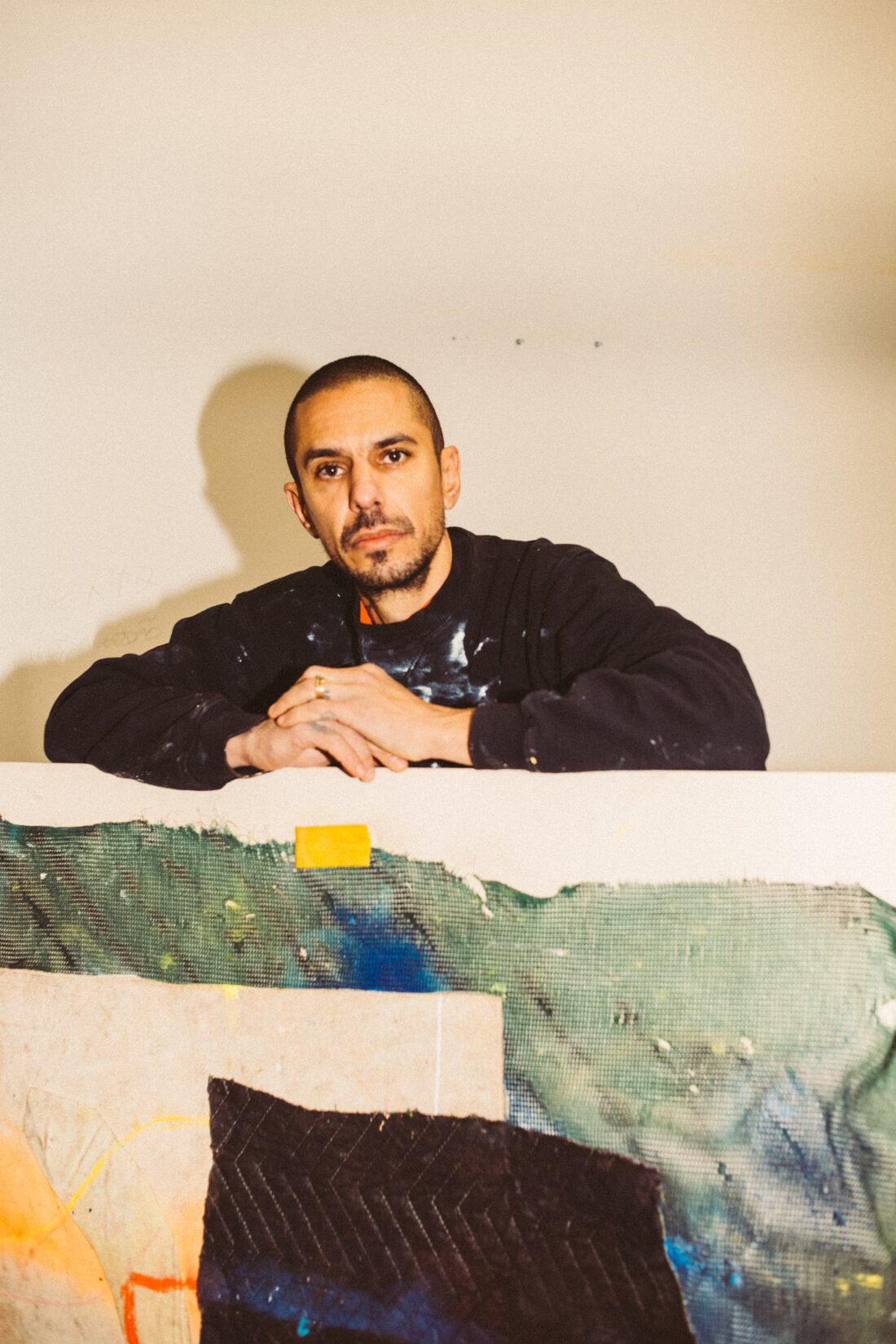
This connection between visual art, poetry, and spirituality has long shaped Salomão’s practice. His paintings often unfold through repetition and gesture, resembling a meditative process as much as a formal one. The act of making becomes a means of attuning to forces beyond rational understanding. Symbols emerge organically, serving not as fixed meanings but as portals into states of reflection, curiosity, and wonder. In this sense, Salomão’s work shares affinities with traditions of automatic drawing, spiritual abstraction, and improvisational music, all of which embrace intuition as a creative guide.
For Salomão, painting is not simply a reflection of reality—it is a means of reimagining it. Through gesture, color, rhythm, and assemblage, he reveals beauty within complexity and harmony within chaos, offering a vision of the world that is at once deeply personal and expansively universal.