MosbyKarina Sharif: Sculpting Lineage, Memory, and the Sacred Feminine
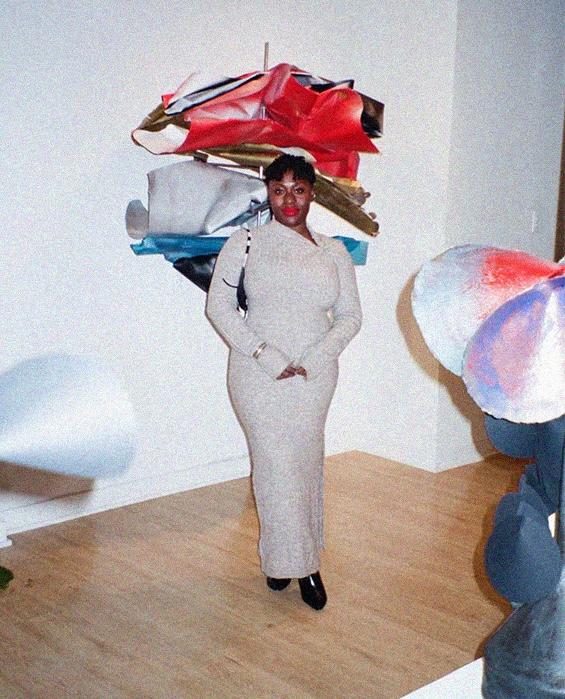
In the work of Brooklyn-based multidisciplinary artist Karina Sharif, sculpture becomes a vessel for communion. Across paper, ceramic, steel, stone, light, and found objects, Sharif creates works that honor the enduring presence of Black women and femmes—those who came before us, those who surround us, and those whose guidance continues to resonate beyond the visible world. Her practice is rooted in an expansive understanding of ancestry, transforming personal histories into immersive sculptural experiences that invite viewers into spaces of reflection, restoration, and connection.
For Sharif, art functions not merely as an object but as an offering. Drawing from family histories and oral traditions passed through generations of women, her work explores how memory is carried through bodies, materials, rituals, and domestic practices. Whether through monumental sculptural installations, illuminated forms, wearable works, or intimate ceremonial objects, Sharif continually returns to questions of lineage: How do we remain in conversation with our ancestors? How do histories of labor, love, and resilience continue to shape contemporary life? And how might sculpture make these invisible exchanges tangible?
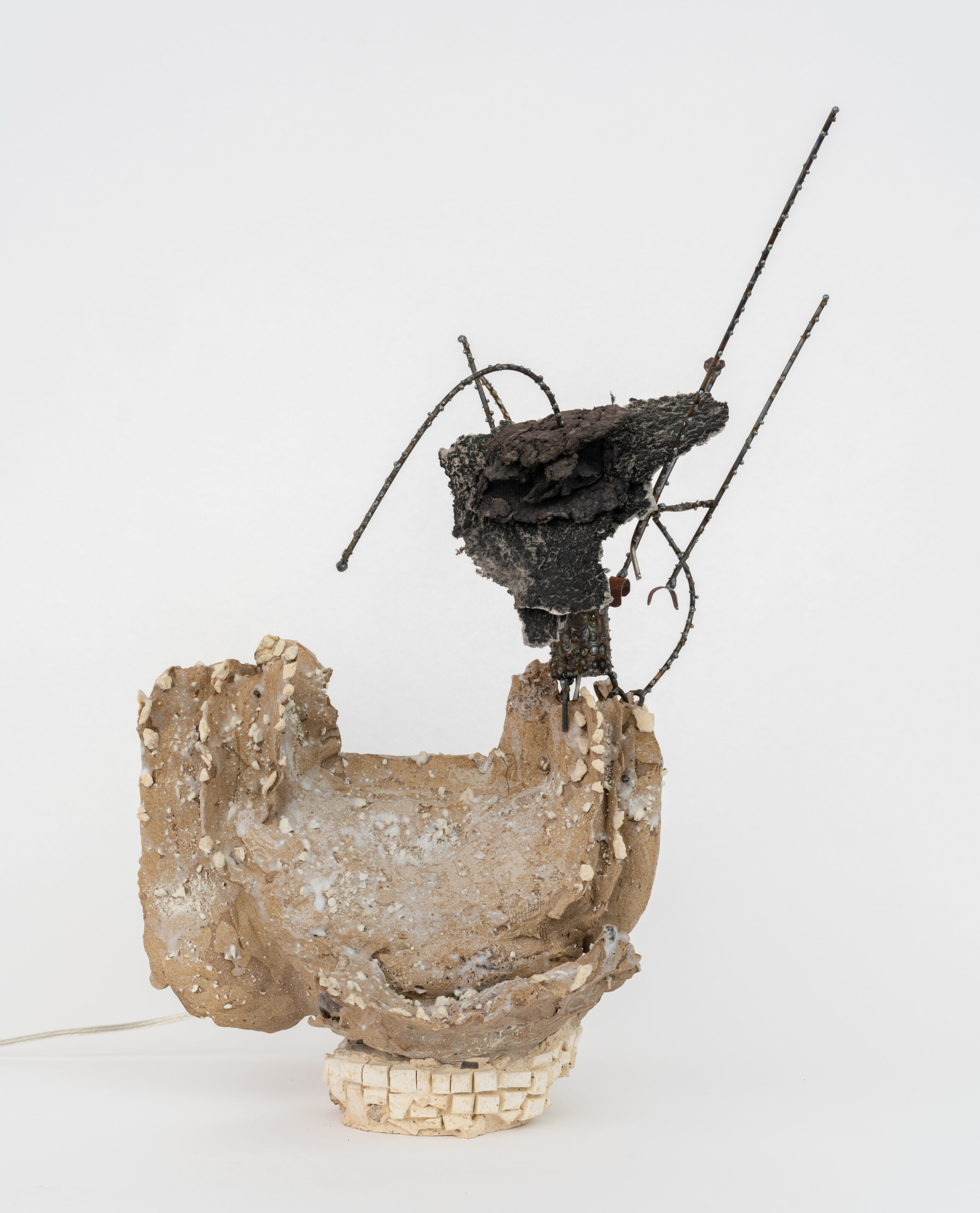
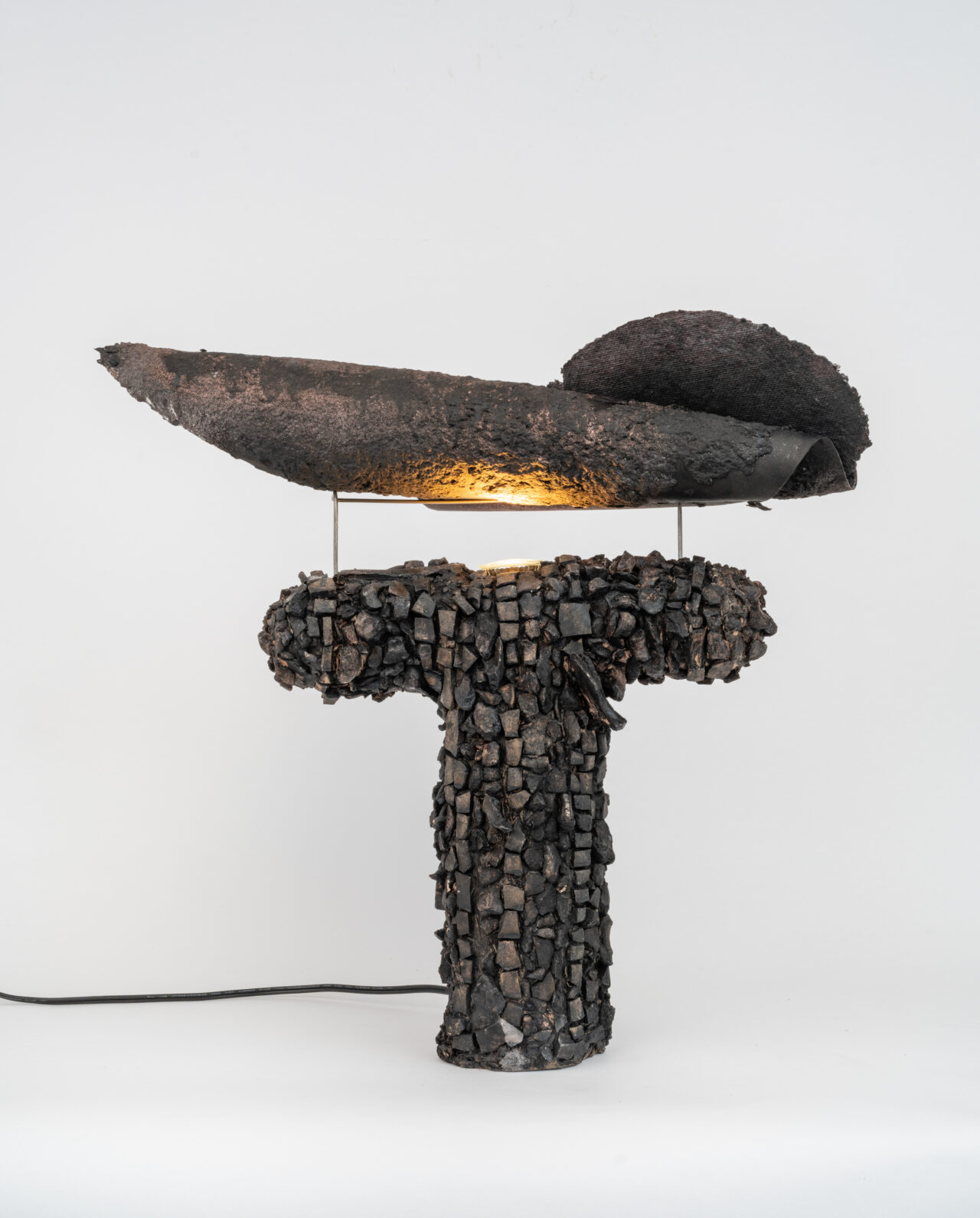
Karina Sharif, Trelawny (Light sculpture), 2025
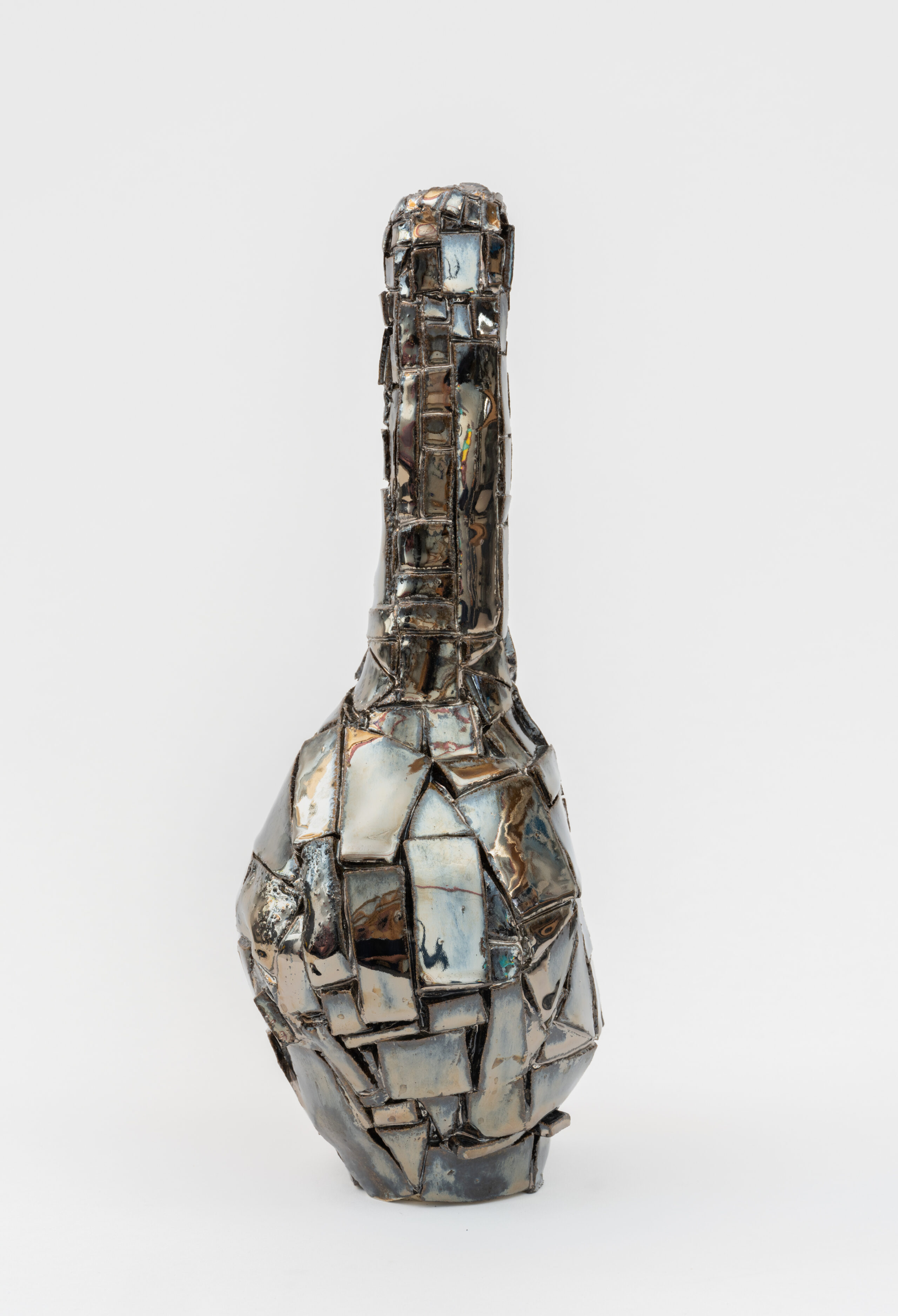
Karina Sharif, Channel 4 Vase, 2025
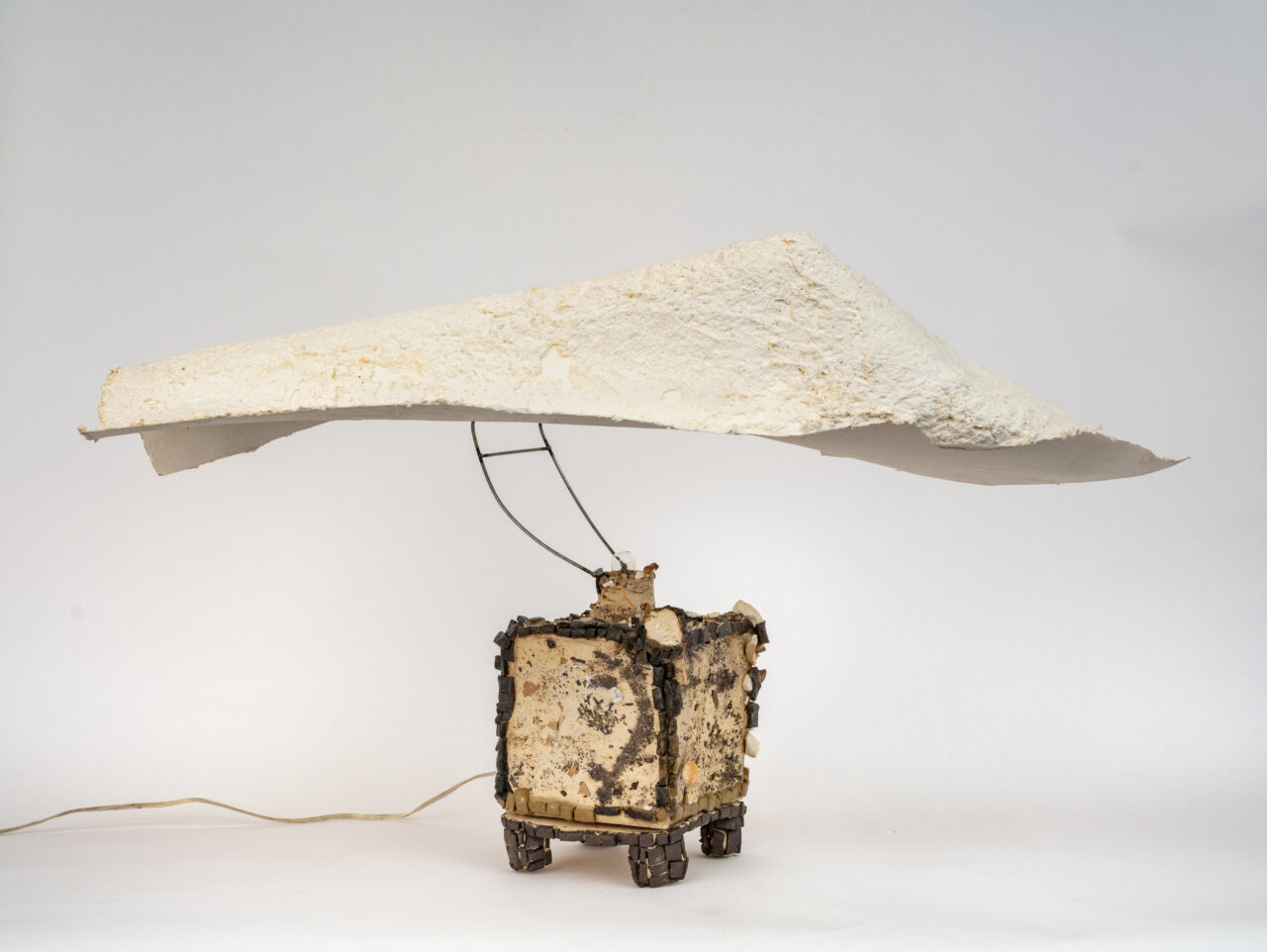
These inquiries are at the heart of In Her Absence: Matriarchal Musings, Sharif’s solo presentation with Gallery 495 at The Armory Show 2025. Inspired by stories of her maternal ancestors in nineteenth- and twentieth-century rural Jamaica, the exhibition transforms familial memory into a constellation of sculptural forms that bridge spiritual and physical realms. Ceramic, steel, paper, ink, and family-found objects converge to create an environment where remembrance is not static but active—an ongoing dialogue between generations.
Central to this body of work are materials imbued with personal significance. Stones gathered alongside her mother during childhood visits to the sea become embedded within lamps, incense holders, wall works, and beaded sculptures. These elements function as repositories of memory, carrying the emotional weight of shared experiences while simultaneously connecting personal narratives to broader diasporic histories. Through their incorporation, Sharif elevates everyday objects into conduits of ancestral transmission. The resulting works feel both intimate and monumental, grounding spiritual inquiry within the tactile language of materiality.
Throughout her practice, Sharif has consistently challenged assumptions about craft, adornment, and domestic labor. Early works transformed paper—a material often dismissed as fragile or ephemeral—into expansive sculptural forms celebrating the beauty, complexity, and resilience of Black femmehood. Over time, her vocabulary has expanded to include ceramics, steel, lighting, furniture, and installation, yet her commitment to honoring forms of care and labor historically associated with women remains unchanged. Her sculptures pay homage to traditions of sewing, weaving, farming, and making, recognizing these practices not as peripheral activities but as profound acts of world-building and cultural preservation.
Sharif’s work is also informed by her interest in systems of memory and knowledge transmission. She references the Lukasa memory board of the Luba people of the Democratic Republic of Congo, a tactile device used to preserve genealogies, histories, and cultural knowledge through touch. This influence resonates deeply throughout the exhibition. Like a Lukasa board, Sharif’s sculptures are not intended solely for visual consumption; they encourage a mode of engagement rooted in sensory experience, reflection, and embodied remembrance. Viewers are invited into relationship with the work, participating in acts of recollection and connection rather than passive observation.
Underlying this approach is Sharif’s belief in the transformative potential of rest, care, and collective healing. Across exhibitions and installations, she has repeatedly framed artistic spaces as sanctuaries—places where Black women, femmes, and gender-expansive individuals can be celebrated as divine, protected, and fully seen. Her sculptures often evoke organic forms: petals, bodies, seeds, vessels, and geological formations. These recurring motifs suggest cycles of growth, protection, and renewal, positioning care as both an aesthetic and political act.
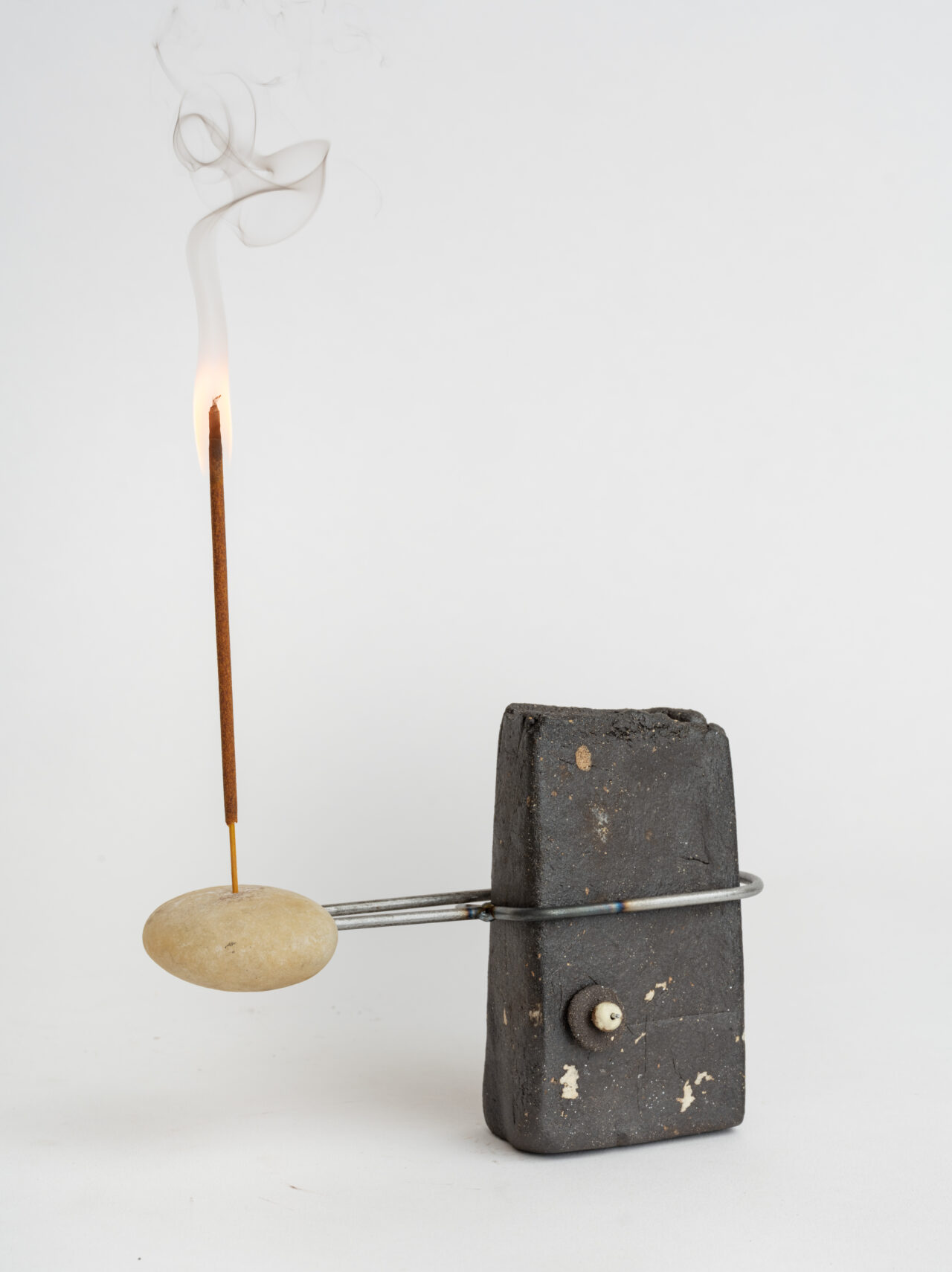
The spiritual dimension of Sharif’s work is inseparable from its material presence. Light emerges frequently as both symbol and medium, illuminating pathways between memory and embodiment. In her hands, a lamp becomes more than a source of illumination; it becomes a beacon, a memorial, a gathering point. An incense holder becomes an altar. A stone becomes a witness. These objects occupy a space between sculpture and ritual, inviting contemplation of the unseen forces that continue to shape identity and belonging.
As Sharif’s practice evolves, her work remains grounded in a profound commitment to honoring Black femme life in all its multiplicity. Through careful attention to material, memory, and community, she constructs visual languages that celebrate resilience while making room for tenderness, vulnerability, and joy. Her sculptures remind us that ancestry is not fixed in the past but lives within the present—carried forward through stories, gestures, objects, and acts of care.
“In this body of work, I wanted to articulate the sacred lines of communication between realms—how they inspire groundedness, joy, love, and expansion,” Sharif says.
In doing so, she offers more than sculpture. She offers a way of remembering. A way of listening. And a way of understanding that the bonds connecting generations remain present, luminous, and alive.